

My biggest heartbreak was a 1960s suede jacket I found at a flea market. It was perfect. Soft, buttery leather, fringes that swung just right. When summer came, I did what made sense to my dumb brain: I put it in a plastic bag and shoved it under my bed.
When fall came around, I pulled it out, and it was stiff. The leather had dried out and lost its suppleness. There was a weird musty smell that never came out. I’d basically suffocated it.
So here’s my real, no-BS guide to storing vintage, built on my many failures.
First, you absolutely must clean everything
I know it’s tempting to skip this. The dress looks clean, right? Wrong. The invisible enemies are your body oils, perfume, and even dust. If you store them, they slowly eat away at the fabric. I had a white vintage blouse that developed permanent yellow stains under the arms because I was lazy.
My rules are simple:
- If it’s basic cotton or denim, hand-wash it gently.
- If it’s wool, silk, or anything fancy, just pay for dry cleaning. It’s cheaper than replacing the item.
- Let it air dry for at least 24 hours after you think it’s dry. I’m serious about this. I once stored a wool sweater that felt dry but had moisture deep in the fibers – it grew mold.
How you package things makes all the difference
Forget wire hangers. They’re the worst thing that ever happened to clothing. They leave weird bumps in shoulders and can actually tear delicate fabrics.
Here’s what actually works:
- For sweaters and knits, always fold them. I use cheap tissue paper to cushion the folds – just ball it up and put it in the sleeves and neckline.
- For structured pieces like blazers, use wide, sturdy hangers. I bought a bunch of wooden ones from a closing sale and they’ve been game-changers.
- I store everything in plain cardboard boxes. Nothing fancy. The key is that cardboard breathes. Plastic tubs can work if you leave the lid slightly cracked.
The real challenge is where to put everything
Most of us don’t have perfect storage spaces at home. My apartment sure doesn’t.
Let’s be honest about what doesn’t work:
- Attics get brutally hot and will bake your clothes
- Basements are damp and invite mold
- Garages have wild temperature swings and pests
The ideal is a cool, dark closet inside your living space. But my closets are already overflowing with daily wear and random junk.
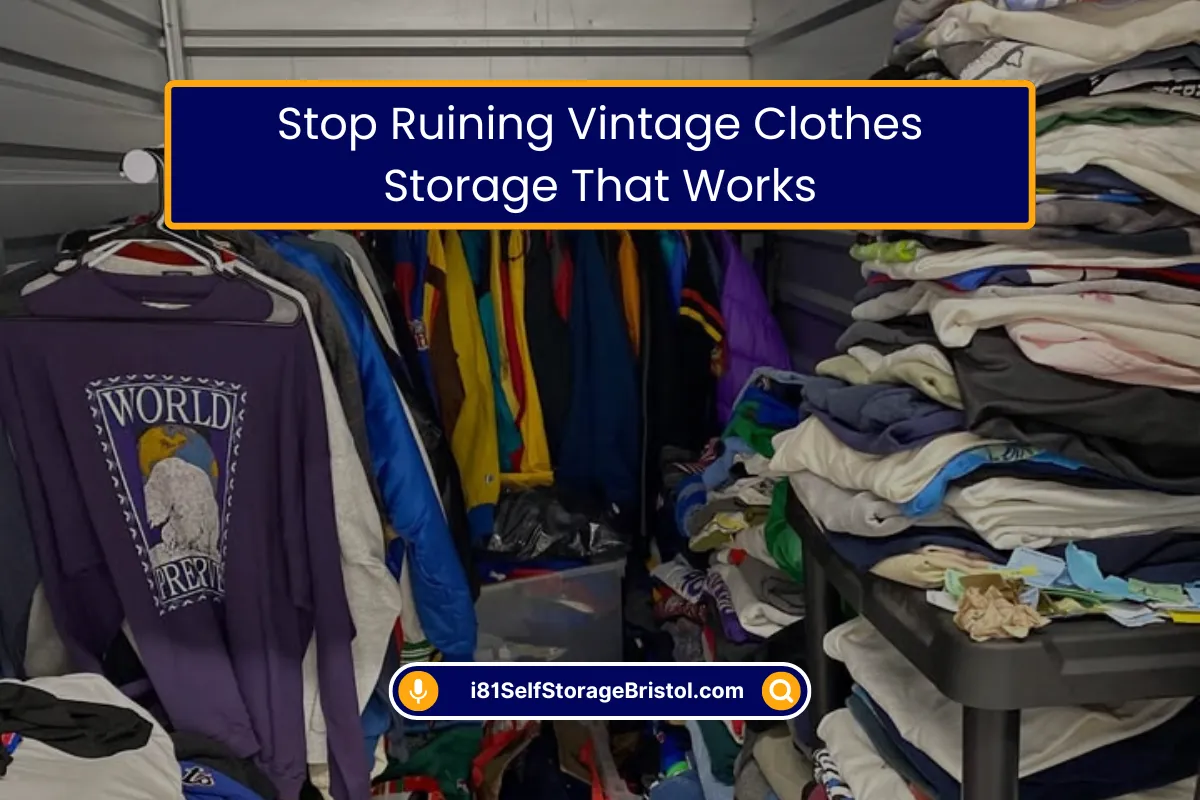
This is why I eventually broke down and got a small storage unit. Not just any unit – one of our climate-controlled ones. I needed a place where the temperature stays consistent year-round, where my good pieces wouldn’t get cooked in summer or frozen in winter. It’s where I keep my actual valuable vintage – the pieces I can’t replace.
A few final practical tips:
- For moth prevention, I use cedar blocks instead of mothballs. They smell better and work just as well
- Every six months or so, I visit my storage unit and rotate the clothes. I refold them along different lines and check that everything’s still in good condition
- For leather items specifically, I condition them before storage – just a simple leather conditioner rubbed in gently
The Bottom Line
Storing vintage properly does take extra effort. But when you pull out that perfect jacket years later and it’s still in amazing condition, you’ll understand why it’s worth it. You’re not just storing clothes – you’re preserving pieces of history.
That’s really it. No magic, just being careful with the stuff you love.











0 Comments