Let’s be honest for a minute. The idea of putting your stuff—your actual, personal life—into a metal closet rented from a stranger is kind of weird when you think about it. You’re handing over a key to a slice of your world.
I get the hesitation. I’ve heard every version of the question: “But… who can get in?” My customers say it with a nervous laugh, glancing at their boxes of photo albums and tax files. So, let’s cut through the sales pitch and talk real life. I own and operate these facilities. Here’s what you’re actually paying for.
First, the cold, hard legal truth
Your rental agreement? It’s not just a receipt. It’s a legal contract that gives you what’s called a “possessory interest.” In plain English? That empty room becomes yours. I have more right to walk into my neighbor’s actual house than I do to open your unit without a rock-solid, legally-defined reason. Those reasons are extreme: a clear emergency (like seeing smoke), a court order (like a police warrant), or you’ve abandoned it and I’ve gone through the months-long lien process. That’s the short list. The “I-was-just-curious-about-your-vintage-Sports-Illustrated-collection” excuse doesn’t cut it. I’d lose my business.
But here’s where people’s brains get tangled: the security
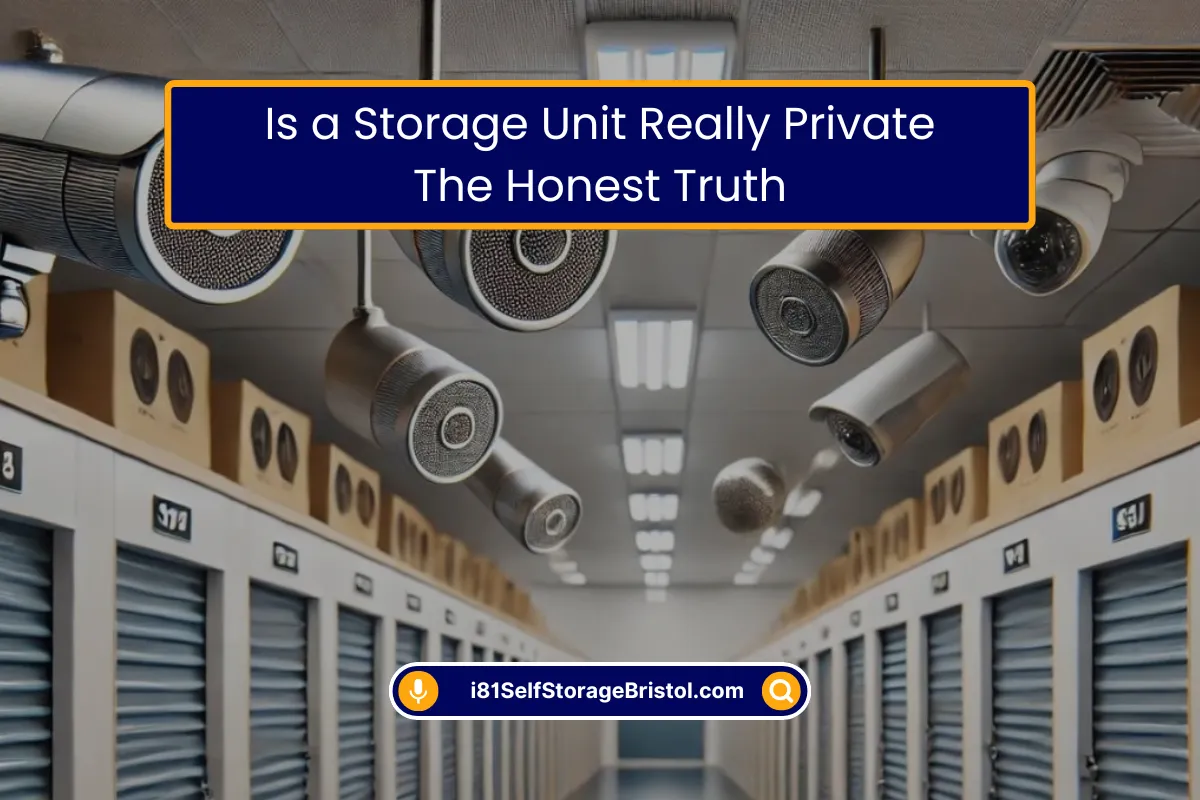
You see cameras. You use a personal gate code. It feels like you’re being tracked. I need you to see this from my side of the fence—literally.
Those cameras pointed at the driveway? They’re not staring at your unit’s door. They’re watching the empty space around it. They’re there so that if some knucklehead in a beat-up truck tries to tailgate you through the gate, I have his license plate. That camera on the corner of the building? It’s watching the dark spot where someone might try to hop the fence. The digital log that records your entry code? It’s not to monitor you; it’s to prove who wasn’t there.
Think of it like this: I’m building the most secure, well-lit, boring parking lot imaginable. My job is to make the communal space so safe and documented that the thought of messing with your private door never even crosses anyone’s mind. The privacy of your unit depends on the lack of privacy in the aisles.
Now, the human part. This is the big one
All the laws and cameras in the world mean nothing if the person running the place is a gossip or a snoop. You have to trust the character of the operation. This isn’t something you find in a brochure; you find it in a handshake.
When you tour my place, Bristol VA Self Storage, I want you to judge us. Look at how we treat the property. Is it clean, or is it littered with broken-down boxes and apathy? Meet my site manager, Dave. Ask him, point blank: “What happens if you think there’s a water leak in my unit?” If he starts talking about “protocols” and “attempting to contact you first” and “emergency access clauses,” you’re golden. If he shrugs and says, “I guess I’d open it,” walk away. Fast.
We train our team to see that roll-up door as a wall. Not a suggestion, a wall. What’s behind it is not our concern. Our concern is the hallway, the roof, the gate. We are maintenance for the shell. You are the curator of what’s inside. Period.
And you? You’ve got a role to play
- Your lock is your responsibility. Buy a decent disc lock or a heavy-duty cylinder lock. The flimsy combination lock from your old gym locker is an invitation.
- Be boringly discreet. When you’re loading in, your stuff is just “boxes.” It’s always just boxes. To your neighbors, to us, to anyone who asks. “Just some old household things” is the perfect, forgettable answer.
- Trust your gut. When you pull into a facility, does it feel secure and professional, or neglected and creepy? That feeling in your stomach is your best guide.
So, is your storage unit a private space?
If you choose wisely, absolutely. It’s a specific, modern kind of privacy. It’s not the secrecy of a diary hidden under a mattress. It’s the confident, quiet privacy of a space that’s protected by a moat of good laws, smart security designed to look outward, and—most importantly—people who fundamentally believe that your business is your own.
The peace of mind comes when you find a place where that belief isn’t just policy, but principle. At our facilities, that principle is the only thing we’re really selling. Everything else is just square footage.









0 Comments