
Alright, let’s have a real talk. No fluff, no robot-speak. Just you, me, and the expensive stuff you’ve probably got stashed in the wrong place right now.
I run a small dental practice from a converted house. Last summer, my office air conditioner died over a long weekend. I didn’t find out until Tuesday morning. Walking into that wall of humid, 90-degree air, my first thought wasn’t for my comfort. It was for the closet.
You know the closet. The one where you keep the “extras.” The bulk order of sterile gauze packs I got a deal on. The boxes of impression materials. The patient record backups from three years ago. I flung that door open and just groaned. The packaging felt damp. The expensive alginate powder? Clumped into a solid, useless brick. Thousands of dollars, literally melting into garbage because I trusted a residential HVAC unit and a cheap drywall closet.
That was my “come to Jesus” moment about medical storage. I’d made all the classic mistakes, thinking I was being thrifty. I bet you might be too.
Mistake #1: The “It’s Just for Now” Box
This is our biggest lie to ourselves. That nebulizer from when your kid had bronchitis? “I’ll keep it, just in case.” That knee brace from your surgery? “Might need it again.” So we shove it in the attic, the basement, or the back of the garage. We forget that “just in case” might be two years from now. And in two years in an attic that hits 130 degrees in summer, that plastic is brittle, the rubber seals are dust, and the electronics are fried. You haven’t saved a thing. You’ve guaranteed you’ll be buying it all over again at 2 AM during a panic attack on Amazon Prime. The cost isn’t just the item—it’s the stress, the delay, and the feeling of being unprepared when someone you love is sick.
Mistake #2: The Paper Trap
Oh, the paper. If you’re managing care for an aging parent, or you’re a solo practitioner like me, the paper will eat you alive. It’s not just old bills. It’s Power of Attorney documents, HIPAA releases, and insurance Explanation of Benefits forms from five years ago that some lawyer might suddenly need. Storing these in a cardboard box under your desk is a time bomb. A single roof leak, a curious pet, a desperate search for a staple remover that leads to a spilled coffee… and suddenly the document that proves your mom’s Medicare eligibility is a papier-mâché mess. The cost here is in hours of your life spent on the phone rebuilding records, and in pure, unadulterated panic.
Mistake #3: The Bulk Buy Blunder
This one hurts the small business owners and the proactive caregivers. You see a sale on diabetic test strips, or wound care supplies, or the special wipes your dad needs. You buy a six-month supply to save money! But then… where do they go? The bathroom cupboard is full. The kitchen pantry is for food. So they end up in the laundry room, next to the hot water heater, where the humidity slowly seeps in and ruins the calibration on every single test strip. Your “savings” just turned into a 100% loss. You’d have been better off buying one box at full price every month.
The Solution I Stumbled Into (And Now Swear By)
So what did I do after I mopped up my own expensive mess?
I got real. I couldn’t build a climate-controlled archive in my practice. I didn’t have the space or the money for a commercial renovation. What I needed was simple: a clean, dry, predictable, locked space that wasn’t inside my own four walls. A space that didn’t rely on my luck with appliances.
That’s when I found the value of a real storage unit. Not a dusty shed, but a purpose-built, climate-controlled room. I’ll be straight with you—this is what we offer at our facility. I started using one myself before I ever worked here. It was the solution to my own panic.
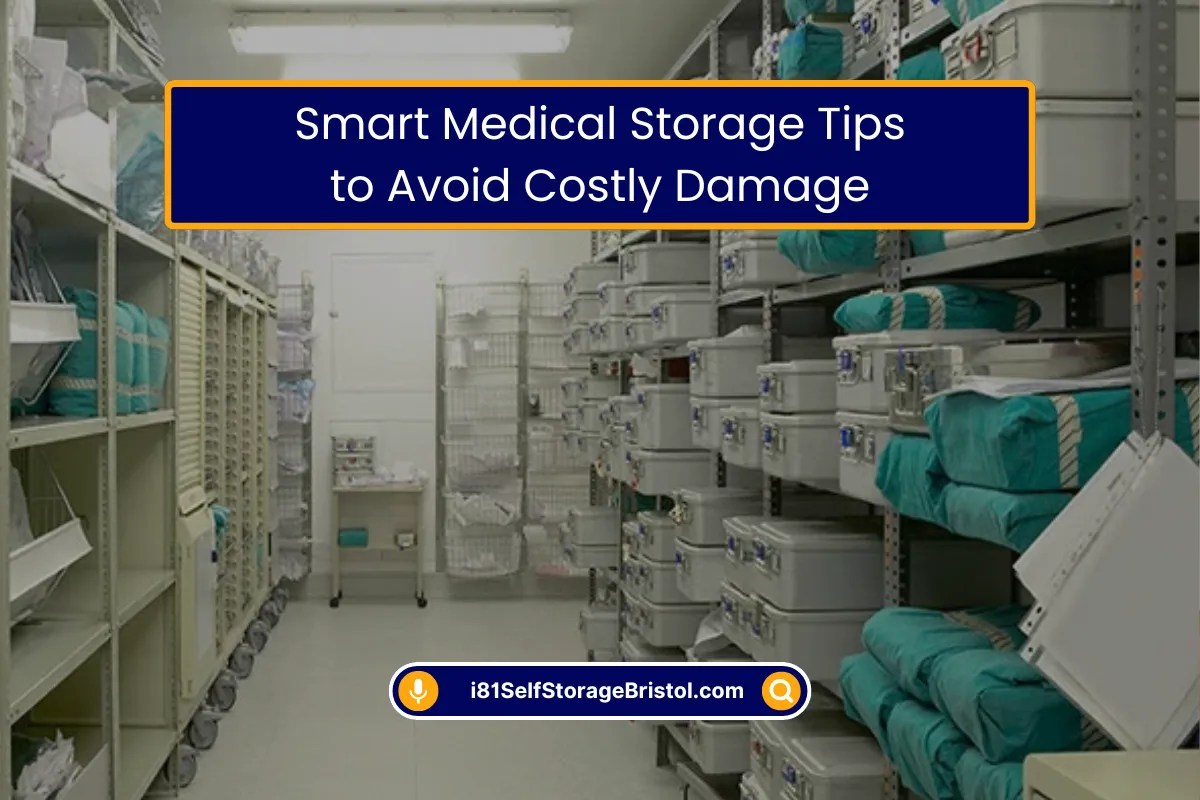
Now, my overflow of dental supplies, my seven years of patient records, and my family’s important medical archives are in a place where the temperature is always 68 degrees and the humidity is controlled. The peace of mind is insane. It’s like an insurance policy I can walk into. For my practice, it’s a HIPAA-compliant extension of my back office. For my home life, it’s where we keep my father-in-law’s old wheelchair and my mom’s important documents—safe, dry, and out of our daily clutter.
Your Very Next Step (Seriously, Do This)
Here’s my real, human advice: Go look at where you’re keeping this stuff right now. Put your hand on the wall in your garage. Feel how hot it is? Smell the air in your basement. That’s what your “just in case” supplies are breathing. Look at that wobbling stack of banker’s boxes full of paper. Now imagine a pipe bursting above it.
The cost of a small, smart storage unit is less than replacing one piece of durable medical equipment or one bulk order of ruined supplies. It’s certainly less than the hourly rate of a lawyer helping you reconstruct lost documents.
The Bottom Line
Stop thinking of storage as where things go to die. Start thinking of it as the safest, smartest cupboard in your house—one that just happens to be down the road, protecting you from your own environment’s bad moods. It’s the least sexy, most genius thing you can do for your wallet and your sanity.
Trust me. I learned the hard way so you don’t have to.









0 Comments