

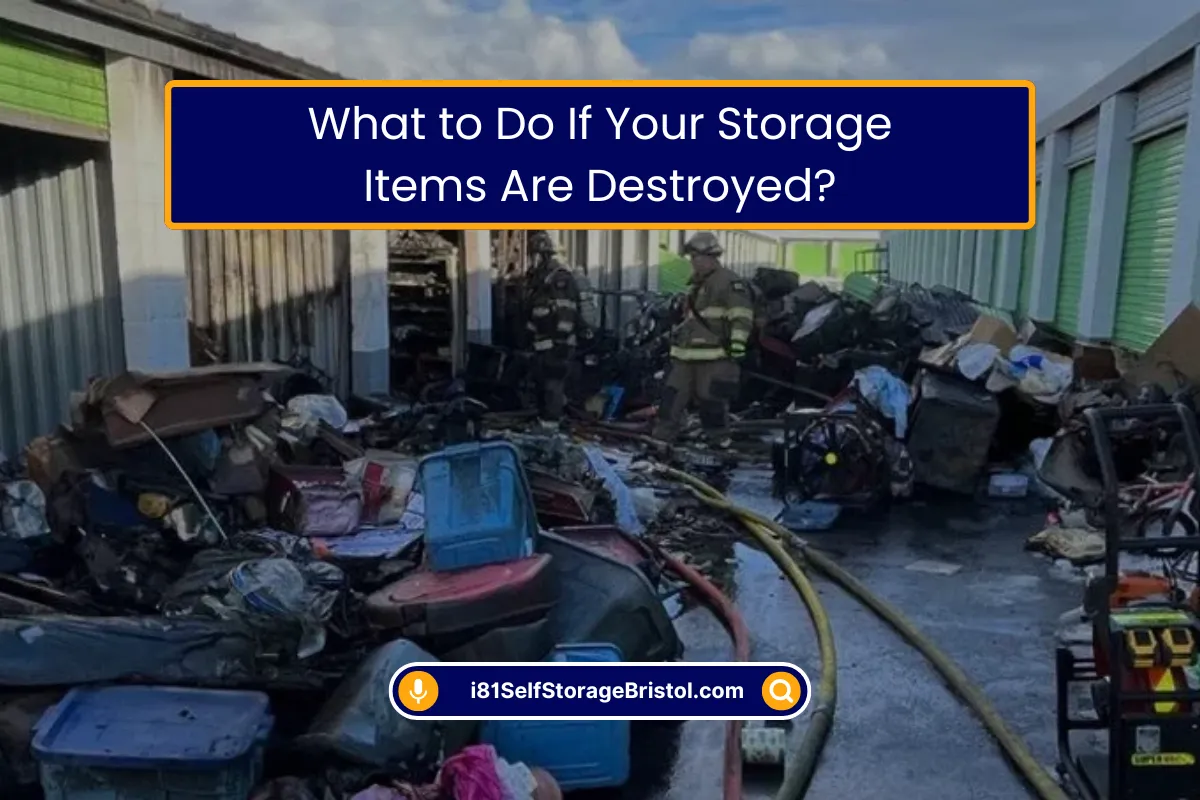
You know that little jingle of keys, the groan of the rolling door… it’s usually a mundane trip. Maybe you’re grabbing the Christmas decorations or finally getting rid of that college futon. But sometimes, you roll that door up and your stomach drops straight to your shoes.
Water marks snaking up the side of your grandma’s hutch. A weird, sweet-stale smell that means mice have been throwing ragers in your boxes. A dark bloom of mold on the canvas of your old camping tent.
It feels personal. It feels like a betrayal. You paid for this space, you locked it up tight, and now your things are wrecked. I’ve been there. Not with a storage unit, but with a basement flood that took out a lifetime of photo albums. The panic, the hot rush of anger, the sheer helplessness—it’s overwhelming. So let’s just take a second. Close the door, lean against it, and breathe. The mess will still be there in a minute. We need to get your head right first.
Okay. You good? Let’s go back in. But this time, your phone is your best friend.
Forget the mess for a second
Don’t you dare start hauling soggy boxes to the dumpster. I know you want to. It feels like action. But it’s the worst thing you can do. Once you move it, the story of what happened gets fuzzy.
Flip your phone to video. Start narrating like you’re the host of the world’s worst home show. “Alright, it’s Tuesday, March 12th, about 2 PM. I’m at unit, and I’ve just opened it to find… this.” Pan slowly. Show the ceiling where the drip might be coming from. Show the puddle on the floor. Get close to the chewed-up corner of the couch. This video is your unshakable truth.
Then, take pictures. A stupid number of pictures. Get down on your knees and shoot the water line on the box. Get the label that says “MOM’S WEDDING DRESS.” This isn’t overkill. This is evidence.
Now, go straight to the manager’s office. Don’t call. Go in person. Be calm, but be firm. “I have significant damage in my unit. I need a copy of my rental agreement and your insurance documentation, please.” Their reaction is telling. A good manager will look concerned, grab a clipboard, and head back with you to see it. A bad one will shrug and point to the fine print. Either way, you’ve started the paper trail.
Let’s talk about the fine print
This is the bitter pill. That rental agreement you skimmed? It almost certainly says the facility isn’t responsible for damage from “acts of God,” pests, mold, or moisture. Their job is the four walls and the roof. Your stuff inside? That’s on you.
This is why they sell you insurance. If you bought it, dig out that packet now. If you didn’t, call your homeowner’s or renter’s insurance agent. Right there in the office. Ask the flat question: “Does my policy cover items in a storage unit?” Have the claim department number ready.
This process is a marathon of paperwork and patience. You will repeat your story ten times. You will email your photos a dozen more. Keep a folder on your phone just for this. Screenshot every email. Write down every name. It’s tedious, but it’s how you fight back.
The emotional triage: saving what you can
Now you can start cleaning. It’s the hardest part. Bring a friend for moral support (and to hand you trash bags).
You’re going to make piles:
- The “Okay, Maybe” Pile: The solid wood table with a water ring? That can be sanded. The metal tools with a bit of rust? Hit them with some WD-40.
- The “It’s Gone” Pile: Sodden cardboard boxes. Mildew-covered fabrics. Anything with mouse droppings or nests. Be brutal. Your sanity is worth more than a ruined box of paperbacks.
- The “This Hurts” Pile: The photo album with damp pages. The baby quilt. For these, don’t toss them in a trash bag. Ask your insurance adjuster about professional restoration services. Sometimes, they can work miracles.
Wear gloves. Wear a mask. Seriously. You don’t know what’s growing in there.
How do you sleep after this? How do you ever trust a unit again?
I’ll tell you what I learned the hard way, and what we’re fanatical about at Bristol VA Self Storage. It’s not about the lock. It’s about the environment.
Cardboard boxes are basically mouse apartments and mold sponges. Spend the money on plastic bins with locking lids. They’re stackable, they’re sturdy, and they buy you time if something goes wrong.
Never, ever let your things sit directly on the concrete floor. Concrete sweats. Pipes leak. Use pallets, or cheap 2x4s, or metal shelving. Create that air gap. It’s a forcefield against minor disasters.
And if you are storing anything you care about—wood, photos, records, clothes, electronics—a standard unit is a gamble. You need climate control. Not just “it gets heat,” but real, honest-to-goodness humidity control. That’s what stops the mold and the warping. That’s the difference between a close call and a total loss. It’s why we built our Bristol VA Self Storage facilities with so many climate-controlled options. Because some things aren’t just “stuff.” They’re worth the extra twenty bucks a month.
Finding your ruined things stings. It feels like a little violation of your past. But you aren’t powerless. Document everything. Know your contract. Pack like a paranoid pro. And choose a place that actually cares about the conditions, not just the rent.
We see you. We get it. And we’re here to make sure it doesn’t happen again. Now, go get those gloves. You’ve got this.







0 Comments